
The Voice You Trust Can Now Be Borrowed
The FBI logged $893 million in reported AI-related fraud losses in 2025, as of its April 2026 report. For businesses, the cheapest defense is still a callback rule.
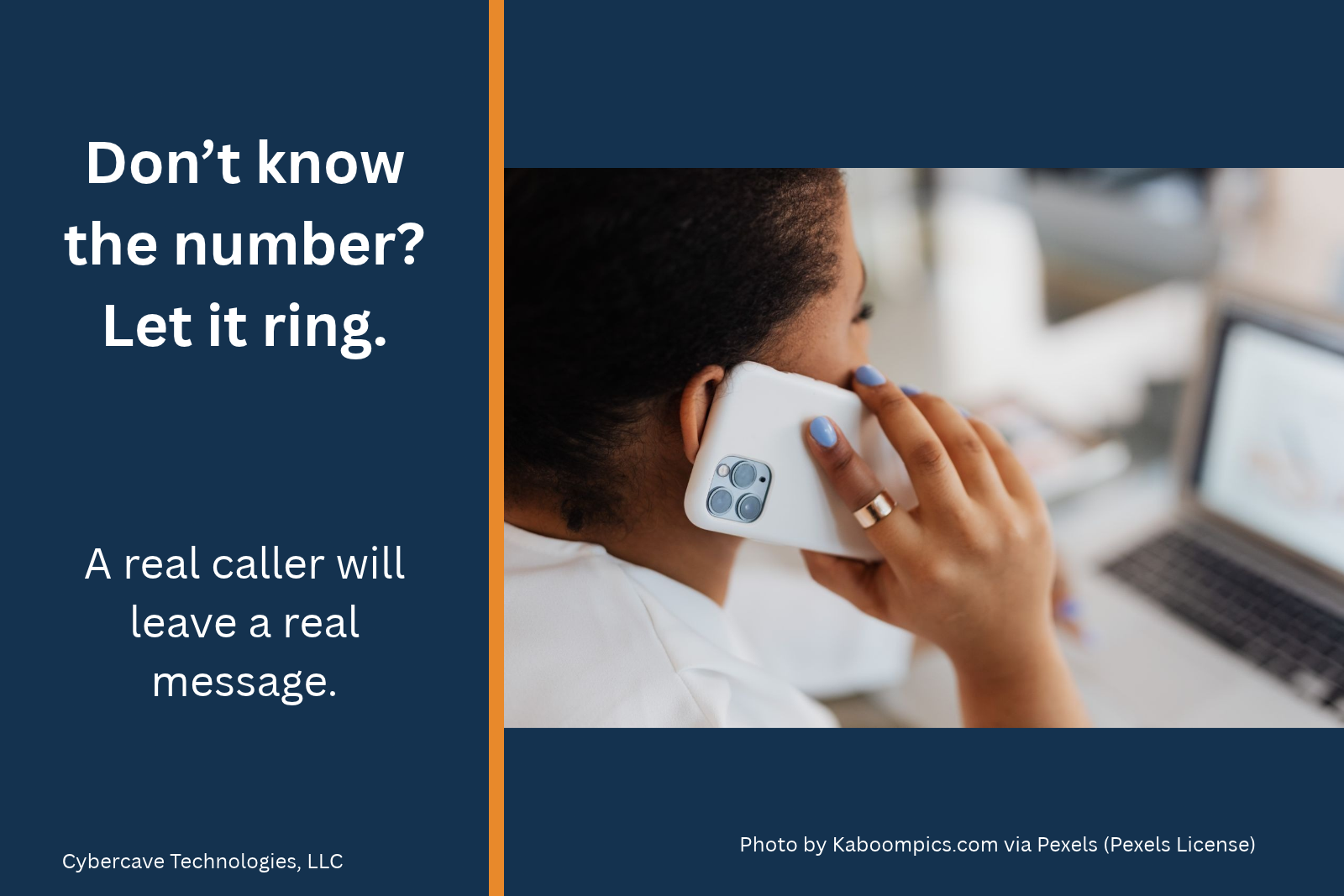
A familiar voice asking your bookkeeper to move money is no longer proof that the person is on the line.
What to do this week: Set a rule that any payment or bank-detail change gets confirmed by calling a number you already have — never the number in the request.
The Federal Bureau of Investigation's (FBI) Internet Crime Complaint Center, known as IC3, received 22,364 AI-related complaints in 2025 with adjusted losses over $893 million, as reported in its 2025 annual report. Those are reported complaints, not a count of every attempt.
Business email is still the expensive door
The same FBI report put business email compromise (BEC) losses at about $3.046 billion in 2025. SecureWorld, reporting on the FBI release, noted more than $30 million of BEC losses were specifically tied to AI, including generated executive messages and voice cloning.
Most of that $893 million, about $632 million, came from investment scams, not business payments, the FBI's report shows. The business piece is smaller but direct: businesses reported more than $30 million lost to BEC schemes involving AI. Overall, BEC cost about $3 billion in 2025. Our calculation: that BEC total works out to more than $8 million a day nationwide.
Picture a screen door with a new lock that still opens for anyone who sounds like family. The technology changed the voice; the weakness is still an unverified request arriving in a hurry.
The invoice version needs no fake voice at all
The Federal Trade Commission (FTC) warned on May 14, 2026, that scammers send fake invoices for things a business never ordered, sometimes marked past due, sometimes as phishing to reach data and networks. The FTC told staff to check every invoice and to confirm who they are dealing with.
The Federal Communications Commission's deepfake guide, accessed October 17, 2026, gives households the matching rule: hang up and call the number on a statement or official site, and do not share account details under pressure. The agencies are describing one habit from two sides.
The other side
The FBI figures count complaints people filed, so they understate attempts that were caught or never reported, and an AI tag on a complaint does not prove AI caused every dollar. That limit cuts against hype, not against caution: even the filed-and-counted floor is large.
No vendor in these sources promises a detector that settles a voice. The defense the agencies repeat is a process a five-person office can run without buying anything.
What this means for Southwest Michigan
In Allegan County, the owner, the bookkeeper, and the person who answers the phone may be the same two people. That makes a callback rule more valuable, not less: the second check is a phone call to a saved number, plus one other person approving a changed bank account.
Write the rule where payments happen. Urgency, secrecy, and a new account number are the three signals to slow down, whether the request came by email, text, or a voice that sounded right.
One thing to do this week: put the callback rule in writing and tape it where invoices are paid.
Disclosure: Cybercave Technologies, LLC provides IT services to small businesses. No company named in this article paid for, sponsored, or reviewed it.
This article is general information, not advice for your specific situation.
Sources (accessed October 17, 2026)
- Primary — FBI IC3, 2025 Internet Crime Report (2025 figures, accessed October 17, 2026): https://www.ic3.gov/AnnualReport/Reports/2025_IC3Report.pdf
- Primary — FBI press release, April 6, 2026, "Cryptocurrency and AI Scams Bilk Americans of Billions" (announcing the 2025 report): https://www.fbi.gov/news/press-releases/cryptocurrency-and-ai-scams-bilk-americans-of-billions
- Primary (separate agency) — FTC, May 14, 2026, "Run a small business? Pay your bills, not scammers": https://consumer.ftc.gov/consumer-alerts/2026/05/run-small-business-pay-your-bills-not-scammers
- Primary (separate agency) — FCC consumer guide, "Deep-Fake Audio and Video Links Make Robocalls and Scam Texts Harder to Spot," accessed October 17, 2026: https://www.fcc.gov/consumers/guides/deep-fake-audio-and-video-links-make-robocalls-and-scam-texts-harder-spot
- SecureWorld, 2026, "FBI: AI-Enabled Fraud Topped $893M in 2025" (independent reporting on the FBI release): https://www.secureworld.io/industry-news/ai-enabled-fraud-topped-893m-fbi
Independence note: FBI sources (1–2) count as one; FTC (3) and FCC (4) are separate agency primaries; SecureWorld (5) is independent reporting. At least 3 independent sources. No X source counted. Note: this is AI-enabled fraud mechanics, distinct from the earlier fall election/Medicare/ticket scam-calendar article.
Human-scale math: $3,046,598,558 ÷ 365 ≈ $8,346,847 per day — our calculation, shown as more than $8 million a day in prose, from FBI 2025 BEC figures. AI-related investment losses $632,041,188 of $893,346,472 total are sourced to the FBI report, not derived.
General information only. Corrections: support@cybercavetech.com